


Inset vs. Overlay Cabinetry
A Practical Guide to Deciding What’s Best for Your Project
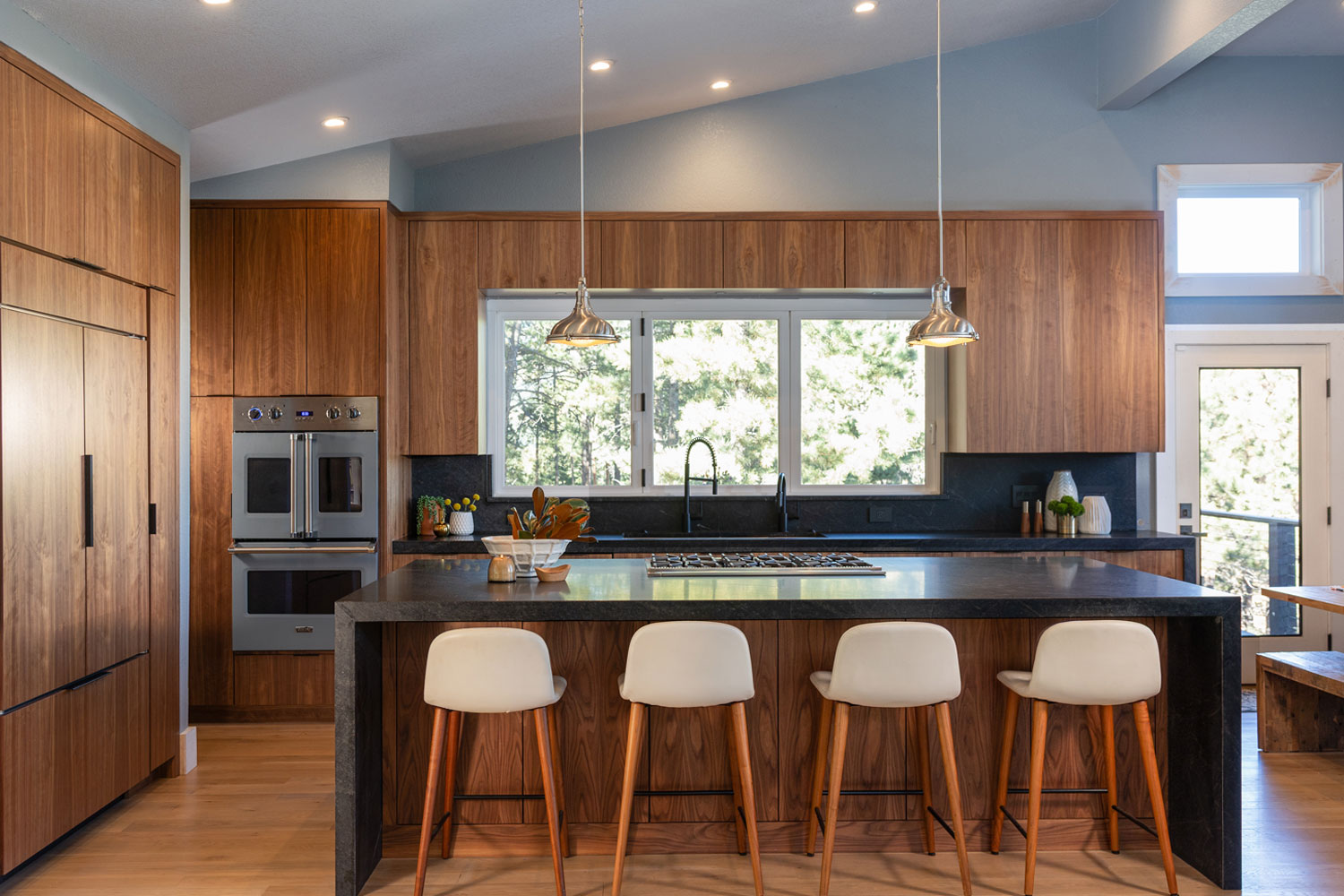
Beyond the aesthetics and the price tag — the questions worth asking before you commit.
If you have spent any time researching kitchen cabinets, you have read some version of the same article: inset looks timeless, overlay is more practical, inset costs more. The information is not wrong — but it barely scratches the surface of what you actually need to know before spending tens of thousands of dollars on cabinetry that will be in your home for decades.
At Distinctive Cabinetry & Designs, we build both styles in our Golden, Colorado facility. We work with the wood, we see what holds up and what doesn’t, and we talk to home owners every day who come in still feeling unsure. This guide is our attempt to give you the complete picture — not just the surface comparison, and the questions worth asking before you commit.
We have organized this around a simple framework: three things that genuinely favor overlay, three that genuinely favor inset, and two things that depend entirely on who you are and how you live.
Advantages of Overlay Cabinetry
1. Cost
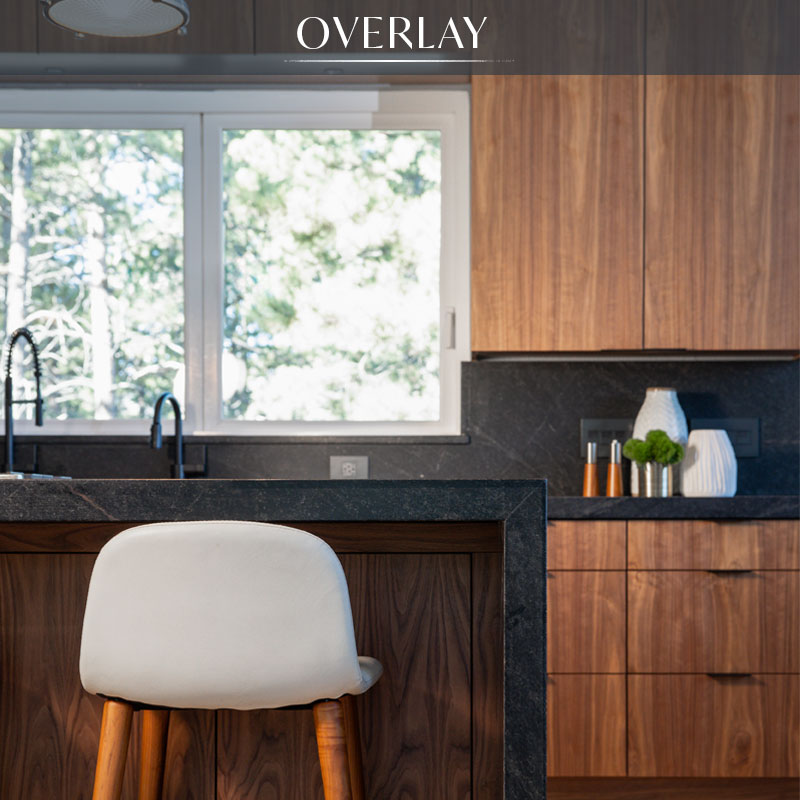
Full-overlay cabinetry, often called “frameless” or “Euro-style” cabinetry, offers a more cost-efficient path to a refined, high-end appearance of your custom cabinetry project. By allowing cabinetry fronts to sit over the cabinet box rather than within it, the construction process is more forgiving, reducing both fabrication complexity and frame material expenses.
This efficiency translates directly into lower project costs, without sacrificing visual impact. In many cases, the savings can be reallocated toward higher-quality materials, upgraded finishes, or enhanced functionality — elements that can contribute meaningfully to the overall result.
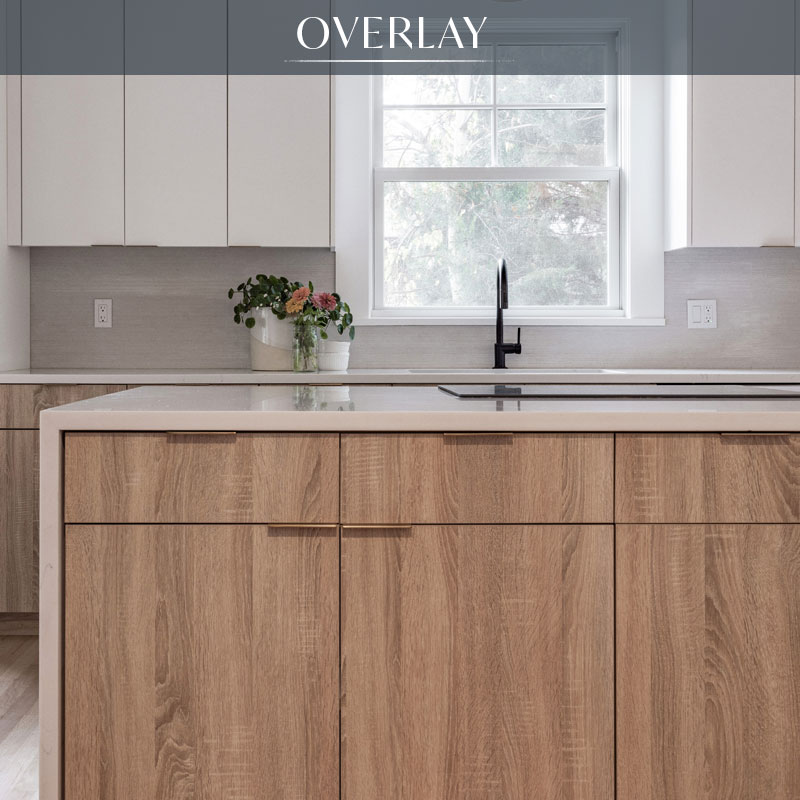
The cost of inset cabinetry typically runs 25–35% more than a comparable overlay build.
This is because precision inset construction requires:
- Premium hardwoods
- Specialty hardware
- Precision manufacturing
Precision means each door and drawer:
- Is fitted to tolerances measured in fractions of a sixteenth of an inch
- Has tighter joinery
- Has perfectly square face frames
- Has Hinge calibration — requiring three-dimensional adjustment on every door
All of which adds significant labor and time.
The premium for inset cabinetry isn’t merely an aesthetic choice; it’s an investment in the visible precision and tighter tolerances that define a truly custom cabinet. Overlay achieves a similarly polished outcome with fewer technical constraints, making it a practical choice for projects seeking to balance design, performance, and budget.
2. The Storage Difference Is Real
Yes, inset cabinets slightly reduce interior depths. Overlay cabinets maximize usable interior space because doors sit on top of the frame rather than within it. The difference is modest in dimension but can be meaningful in function.
The good news is that most standard cabinet accessories are available in sizes compatible with inset cabinets.
These include:
- Pull-out shelves
- Lazy Susans
- Drawer organizers
- Roll-out trash bins
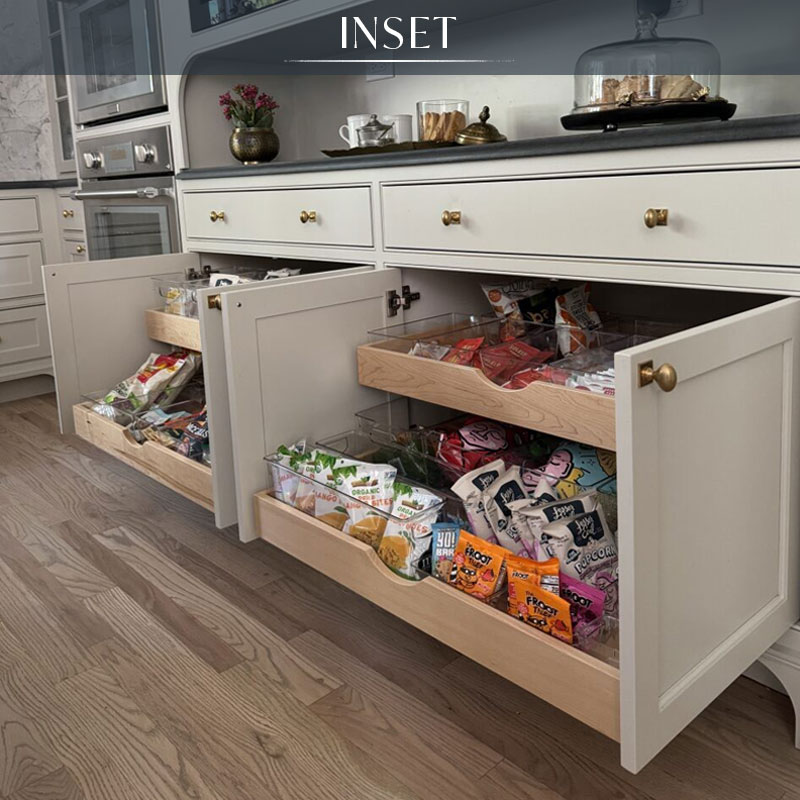
A well-designed inset kitchen accounts for accessory dimensions during the planning phase. Because we design inset cabinetry regularly, this coordination typically happens early in the process, ensuring every accessory you want is specified correctly from the start.
3. Humidity Tolerance
Changes in relative humidity cause expansion and contraction in wood, regardless of finish.
Overlay cabinets can be more forgiving to these changes because the door overlaps the frame. Inset cabinets, by contrast, rely on tight clearances, making them more sensitive to seasonal changes.
Here is the science of the wood:
- A 4% change in moisture content causes measurable dimensional movement
- Movement can exceed the manufacturing tolerances of the door itself
- No finish — not paint, not stain, not sealer — stops wood from breathing (moving). It slows the process. It does not stop it.
Here is the science of Colorado humidity:
- The recommended stable humidity range for wood cabinetry is 35–50% relative humidity (RH).
- Denver and the Front Range sit at an average of 30–42% RH depending on the season.
- Turn your furnace on in winter and indoor humidity can fall well below 30% without a humidifier. In summer, especially with monsoon patterns, it can swing the other direction.
With overlay cabinets, changes in humidity tend to be more forgiving — a door that expands slightly can still function properly because, again, it sits over the frame rather than within it. Inset cabinetry is often described as more sensitive to these shifts, since the door fits inside the face frame. However, when properly built with a consistent 1/8" reveal, there is sufficient allowance to accommodate the typical seasonal movement of wood without compromising performance.
The tolerances that make inset beautiful are the same tolerances that make it sensitive — which is exactly why working with an experienced custom shop like Distinctive Cabinetry & Designs is so important.
Where Inset Cabinetry Stands Out
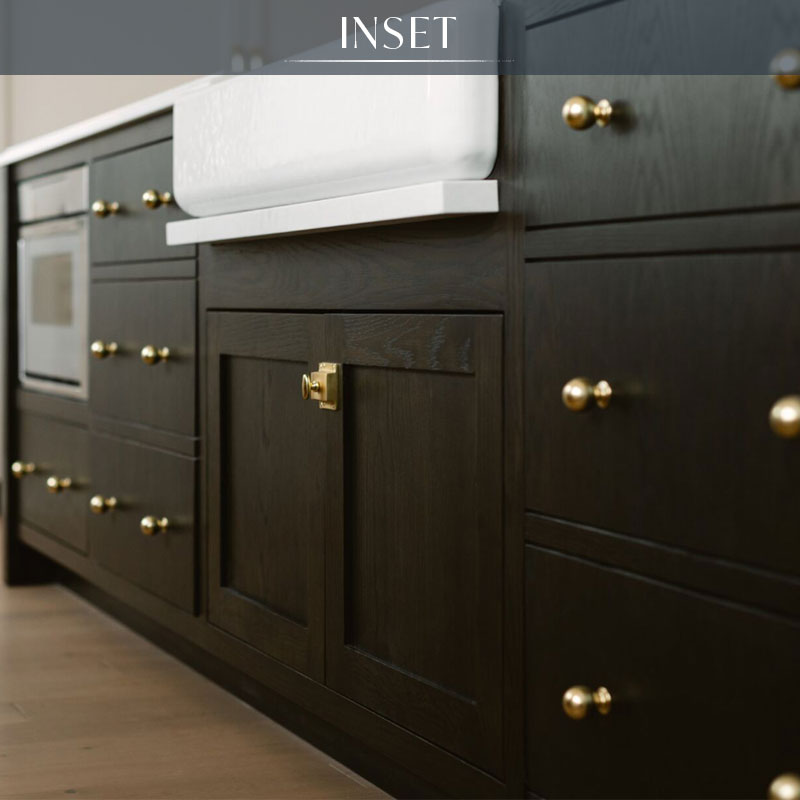
1. Inset Is a Quality Signal
Many blogs reduce the inset vs. overlay discussion to a matter of style with an added cost. This oversimplification omits what the premium actually represents — the meticulous precision and construction methods required to build high-end, furniture-grade inset cabinetry.
One distinguishing aspect of our approach at Distinctive Cabinetry & Designs is the use of continuous face frames that span multiple cabinet boxes. Rather than treating each cabinet as an isolated unit — with a visible seam between two boxes — this method creates a unified structure, resulting in consistent reveals and a more cohesive, furniture-grade appearance.
For homeowners, the practical implication is clear: well-built inset cabinetry is inherently a product of superior materials and expert craftsmanship. The construction cannot be imitated or approximated.
Indicators of poor inset construction include:
- Substandard materials
- Imprecise joinery
- Cabinets that are slightly out of square
- Face frames that are not perfectly flat
- Panels that are inconsistent in thickness
Visual signs of poor inset construction include:
- Uneven reveals
- Binding doors, or
- Gaps that should not be there.
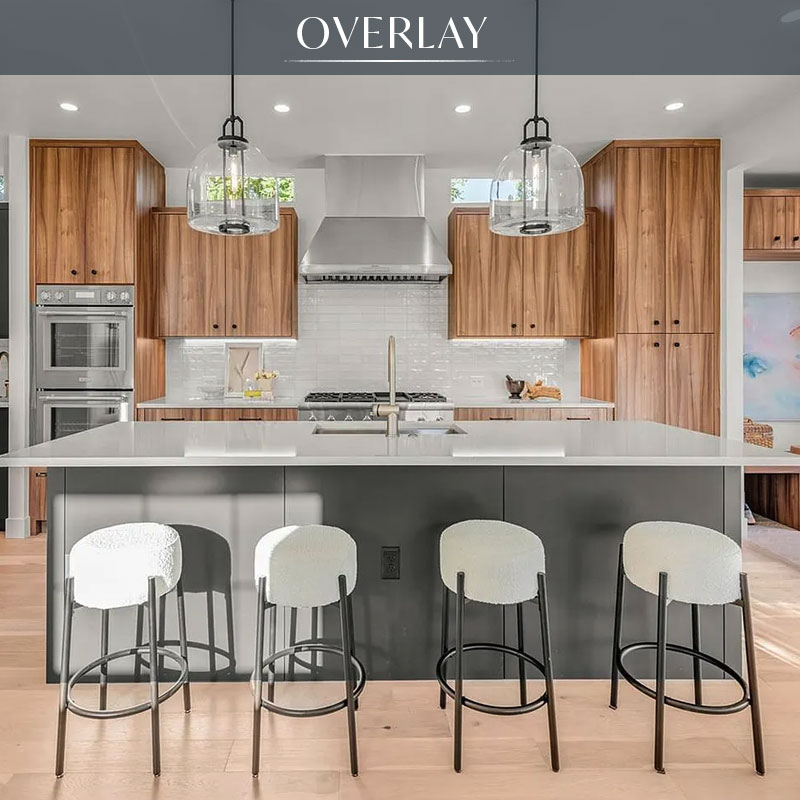
With overlay, the door hides those imperfections. With inset, there is nowhere for them to hide. These are the details that separate a well-built inset cabinet that looks the same at year ten as it did at installation from one that has started to show its age. These details are also impossible to verify from a photo or a showroom sample — which is why the manufacturer's process and material standards matter more with inset than with any other cabinet style.
Because our inset and face frame cabinetry construction requires exact alignment across the entire run, it places greater demands on material stability, joinery, and installation accuracy. At DC&D, inset projects are built to tighter tolerances and undergo more rigorous quality checks prior to finishing and installation to ensure long-term performance and visual consistency.
2. Wear Patterns & Material
Every cabinet construction style has a surface that takes the everyday abuse of kitchen life. The question is not which style is more durable in the abstract. It is which surface you would rather have absorb the damage?
- The bumped hip
- The grocery bag corner
- The toddler with a toy.
With a full overlay cabinet, the door edge surface is the most vulnerable point for:
- Denting
- chipping, and
- water infiltration
This is particularly true on painted finishes. At DC&D, we fully capture these exposed edges with finished ends, allowing even overlay cabinetry to offer added durability to everyday wear and tear.
With inset construction, the face frame around the door takes the everyday contact, and because the doors are recessed, their faces and edges stay more protected.
Neither outcome is avoidable. The practical question is: which style is easier to live with and touch up? This can depend greatly on your usage and maintenance.
- A chipped door edge on an overlay cabinet is visible and relatively straightforward to repaint.
- A dinged face frame on an inset cabinet is also visible, but the exposed frame runs the perimeter of every door and drawer — a larger surface area of potential wear.
Your finish choice matters significantly here. Paint shows chips more clearly on both styles; stain on a hardwood develops a worn patina that tends to look intentional over time.
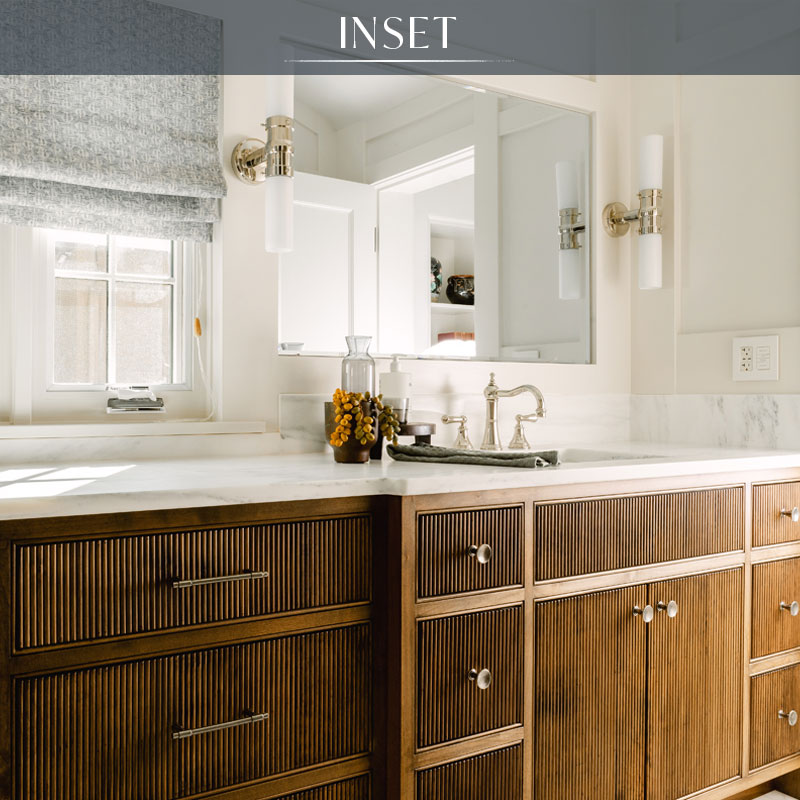
3. Performance in Tight Layouts
While inset cabinetry is sometimes assumed to sacrifice storage due to its construction, in tight, thoughtfully designed layouts, it can actually perform more efficiently than overlay by minimizing clearance-related compromises.
For instance, in a galley or tight L-shape kitchen, full overlay doors protrude further from the cabinet box. In “L” shape spaces, two cabinet runs meet at a corner. The doors nearest that corner — and their handles — can physically collide when both are opened at the same time.
To prevent this, installers add filler strips between the cabinet box and the corner to create enough swing clearance. This solves the problem, but it also means losing an inch or two of cabinet width at the corner and a visible filler in the finished kitchen.
Inset cabinetry can offer functional advantages in these tighter kitchens. Because doors sit flush and swing within a smaller arc. This allows for:
- Corner conflicts to be reduced
- Less required filler space
- Improved walkway clearance in narrow layouts
Two Things That Depend Entirely on You
1. Resale Value
Investing in custom-designed and locally built cabinetry adds value to your home — both in terms of daily use and overall home quality — regardless of cabinetry style. Well-constructed cabinetry reflects a level of craftsmanship and durability that stands apart from mass-produced alternatives and is consistently recognized by discerning buyers.
Plus, selecting a local manufacturer means that you and potential future homeowners can return to the source and seek assistance with any issues or add to an existing design in the future.
While the degree to which that investment is reflected at resale can vary by market, the underlying value of custom cabinetry remains. In higher-end neighborhoods, inset cabinetry may align more closely with buyer expectations, while in mid-range markets, full overlay may represent a more typical standard.
The right question is not “does inset add value?” The right question is: what do comparable kitchens in your specific neighborhood look like? Your realtor can tell you. We can build either way.
2. Manufacturing & Installation Expertise
Inset cabinetry is a specialized product. It requires a level of precision in both manufacturing and installation that most general contractors are simply not set up for.
- The cabinet must be built square to within fractions of a sixteenth of an inch.
- The installation requires shims, scribes, and careful leveling — because an inset cabinet, even slightly out of plumb, can cause every door to hang wrong
- Hinge calibration on inset cabinets requires three-dimensional adjustment on every single door.
The practical implication for homeowners: you spend 25–35% more for custom-built inset cabinetry and end up with a worse result than a well-installed overlay kitchen if the installer does not have genuine inset expertise.
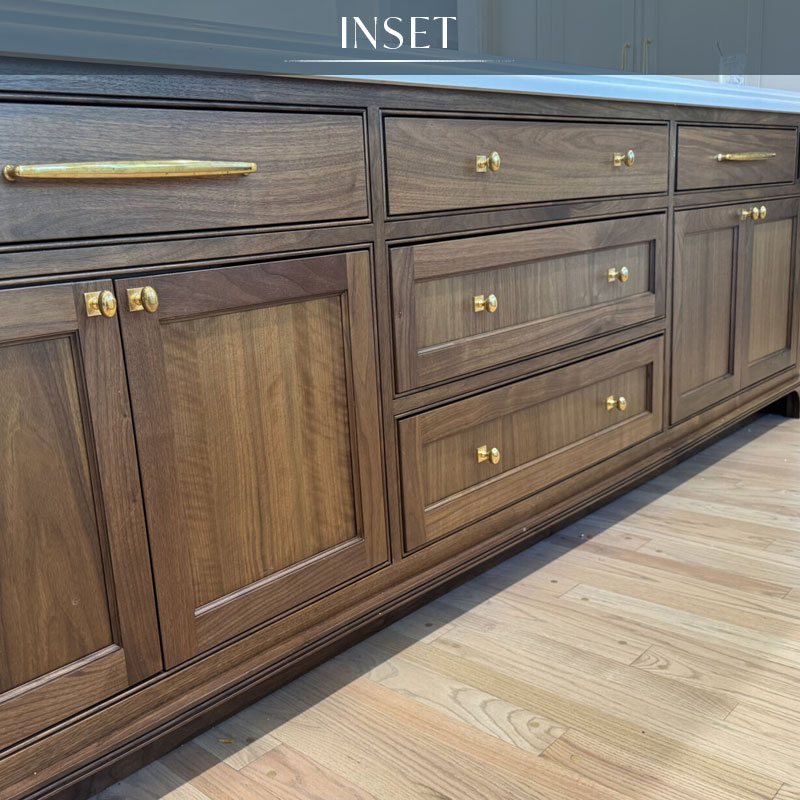
DC&D’s installation team brings the same level of precision to installation as we do to fabrication, ensuring each face frame is aligned and set with exceptional accuracy — so the finished result reflects the full quality of your investment.
Before you commit to inset, we recommend that you ask your cabinet maker:
- How many inset kitchens they have built
- What tolerances they hold in manufacturing, and
- Whether their installation team specializes in inset or handles both styles interchangeably
Making the Decision That’s Right for Your Project
There is no universally correct choice — only the right fit for the project.
- Overlay is often the better choice when prioritizing cost efficiency, storage capacity, and ease of maintenance.
- Inset is often the better choice when prioritizing craftsmanship, visual detail, and long-term design consistency.
In either case, outcomes are driven less by the style itself and more by material selection, construction quality, and installation precision — all skills consistently delivered by Distinctive Cabinetry & Designs.
Not sure what’s right for your space? Schedule a design consultation at DC&D. We look forward to finding creative solutions that improve the aesthetic and functionality of your home.
Making the Decision That’s Right for Your Project
There is no universally correct choice — only the right fit for the project.
- Overlay is often the better choice when prioritizing cost efficiency, storage capacity, and ease of maintenance.
- Inset is often the better choice when prioritizing craftsmanship, visual detail, and long-term design consistency.
In either case, outcomes are driven less by the style itself and more by material selection, construction quality, and installation precision — all skills consistently delivered by Distinctive Cabinetry & Designs.
Not sure what’s right for your space? Schedule a design consultation at DC&D. We look forward to finding creative solutions that improve the aesthetic and functionality of your home.


